

In case you missed it… recent highlights from NCSL in Dialogue, talk2learn’s online community for national education debate:

Download a pdf version of talk2learn highlights: issue 13a (164kb, 1 page)
Download a pdf version of talk2learn highlights: issue 13b (208kb, 1 page)
Download an audio version of issue 13a (1.6Mb, 4 mins) and issue 13b (1.6Mb, 4 mins)
Subscribe to the podcast to receive future updates automatically
If you are not yet a member of talk2learn, find out more about how to join.
Better work-life balance, flexible staffing structures to encourage more new leaders to emerge and the hope that 49 is not too advanced an age to become a school leader were some of the hopes, fears and desires shared in a talk2learn start-of-year hotseat with NCSL Chief Executive Steve Munby.
Variations in attainment among pupils in the same school is a phenomenon that often goes overlooked when staff sit down to scrutinise test results. It’s an area NCSL has been researching and, as a recent talk2learn discussion for the College’s Leadership Network revealed, there are plenty of ideas around for how to identify and tackle the problems.
Better work-life balance, flexible staffing structures to encourage more new leaders to emerge and the hope that 49 is not too advanced an age to become a school leader were some of the hopes, fears and desires shared in a talk2learn start-of-year hotseat with NCSL Chief Executive Steve Munby.
Michael Jolley, a local authority contact for the NCSL leadership succession partnership, pointed out that salary structures now enabled someone with a love of the classroom to earn well and not to have to embrace the myriad of out-of-school responsibilities of headteachers and deputies.

"School cultures and staffing structure models need serious reconsideration so that we can create roles and expectations that are reasonable not just for ‘headliner’ headteachers, but for more ordinary mortals with lives and families," he suggested.
Many school leaders expressed their willingness and commitment to take on leadership roles in the future, with the right support. Marie-Claire Bretherton, deputy head of an infant and nursery school in Lincoln, said the ‘post-modern’ generation recognised that leadership is no longer a one-person job. "Those who are flourishing in their roles have surrounded themselves with a diverse and committed group of people," she said. "It is the team that thinks, reacts and holds all the information required."
Steve Munby agreed that current expectations of the traditional model of headship were too high. "I really do believe that it is time to take a fresh approach; the College is not, however, saying there is one way forward. It’s about what is right for school leaders in their context and we are doing a lot of work [on that] with colleagues around the country."
While welcoming all the support now available for potential school leaders, one 49 year old head of design and technology in a middle school in Worcestershire said she had felt trapped and had not been encouraged to develop her career fully during a quarter-century of teaching. "This left me believing that I, perhaps, did not have the ability needed to be a ‘leader’ and I am still struggling with that confidence barrier. However, the Leadership Pathways programme is doing a great job in changing that opinion I have of myself. I hope I can squeeze in a few years even if it is to help some youngsters in the profession find their professional path more easily."
Claire Turner, the new headteacher of a medium-sized primary school in Cambridgeshire, said her own career path demonstrated a very practical way of growing new leaders. "As a deputy, I worked in a non-teaching role alongside a very experienced head who was committed to developing her staff. I had the opportunity to do most of the jobs a head has to do and cope with the day-to-day emergencies and problems. Taking on headship has not been the huge step up that it would have been had I been a teaching deputy."
Variations in attainment among pupils in the same school is a phenomenon that often goes overlooked when staff sit down to scrutinise test results. It’s an area NCSL has been researching and, as a recent talk2learn discussion for the College’s Leadership Network revealed, there are plenty of ideas around for how to identify and tackle the problems.
Creating a culture in which staff felt able to discuss teaching and learning issues openly helped to address within school variation at the primary school where Sue Thackeray, now principal of a federation of schools in Hertfordshire, used to work. "We had one meeting a month where the teachers were divided into phase groups and a volunteer brought an example of one child in their class who was making great progress and one who seemed stuck. For the ‘stuck’ child, colleagues were asked to discuss what was happening and make suggestions based in their own practice."
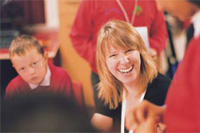
Niki Thomas, one of NCSL ‘s Regional Leaders for the Leadership Network, described how, during a previous headship, her school used Inset days for staff to discuss learning in each individual class. "This raised quite a few variation issues in relation to approaches to phonics, aspects of maths and pupil independence to name a few. The debate seemed so much more real than the discussion we sometimes had in the staffroom. One outcome was a completely revised phonics strategy between foundation stage, Year 1 and 2 and much higher expectations for pupil achievement."
Sallyanne Stanton said her primary school had tried to ensure everyone had a full understanding of what pupils were expected to achieve. "This was no mean task for a school in an area of high social deprivation and low expectations of some staff… who often blamed the children and backgrounds for their poor behaviour. Our focus was about ensuring our children were ready to learn and developing a learning policy that pervaded all subject areas and year groups."
Victoria Othick, a curriculum leader at a grammar school and specialist language college in West Yorkshire, said more should be done to capitalise on the skills and knowledge of subject leaders. "One move would be to provide all new middle leaders with a mentor from the existing middle leadership team within the school. While taking part in the Leading from the Middle programme, the time spent discussing difficult issues and hearing about how others had tackled problem areas was invaluable."
Steven Williamson, headteacher of a community primary school in Rochdale, said that strong leadership was crucial. "We are beginning to see less within school variation because all teachers are becoming leaders who are able to identify trends as they arise and have the freedom to follow through courses of action which raise standards across the school."
Several contributors felt that differing amounts of time allocated to subjects was another factor. Dean Rowley, head of maths and citizenship at a high school in Suffolk, felt the problem was more specific: "The major problem is one of communication between departments. Good practice is not shared enough due to lack of time to sit down and talk. Secondly, the use of data can lead to a skewed picture among departments as some use data effectively and some ineffectively."