

Read the full discussion in talk2learn
Download a pdf version of talk2learn highlights: issue 20b (234kb, 1 page)
Download an audio version of issue 20b (1.6Mb, 3:59 mins)
Subscribe to the podcast to receive future updates automatically
Find out how to join talk2learn
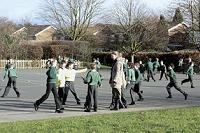
Play is central to children’s development so how can schools embrace it effectively?
The Department for Children, Schools and Families (DCSF) is currently consulting on its play strategy and school leaders were invited to share their ideas in a talk2learn debate.
Key points were structured play promotes physical development but also helps nurture social skills; parents and policymakers need a better understanding of how play teaches children to manage risk; and ‘old-fashioned’ games can be surprisingly appealing to young people today.
A fundamental problem in promoting play is adult over-protectiveness, which, contributors suggested, takes many forms.
One school leader said that the very activities which aid children’s physical development are often off-limits to them. "All pupils, including Key Stage 3 and 4, need ‘structured free play’. Boys particularly require ample physical activity to release their adrenaline and to continue their development of key skills such as balance and reciprocal movements. Skateboarding, bike-riding and rollerblading are often prohibited. No wonder there is boredom. Where is the fun?"
Jennifer Orgill, a Year 4 team leader in a junior school in West Sussex felt that parental fears needed to be addressed. "I increasingly feel dismayed at how little children are participating in play with other children. Parents feel that their children are not safe to play outside away from their homes. However, this interaction with their peers is being replaced with introspective activities involving no social skills and allows children to take no responsibility for their actions."
Rebecca Sjoblom, a Year 6 teacher in Newcastle, felt that overly cautious policymakers also needed a better understanding of the importance of play in children’s development. "It has seemed with litigation becoming more common that the range of equipment available to children has been limited in favour of providing guaranteed safety. Taking risk is part of life; surely taking sensible risks is something children need to learn? Past policies of limiting playground resources in favour of reducing liability was not in the best interests of children. Getting communities involved in the planning may well be the key."
Paula Thomson, an admin officer in Liverpool, said structured play, particularly for vulnerable children, could have a key role in addressing issues such as bullying and development of social skills. "I work in a pupil referral unit for children at Key Stage 3 level expelled from mainstream school due to behaviour problems. With the pupils in my unit in mind, I believe structured play would help with the bullying and disengagement issues many of the pupils have. It could also help to develop important social skills such as team building, co-operation, respect, responsibility and good behaviour which can only benefit their return to mainstream education."
Some schools, meanwhile, have opted for introducing traditional games to kindle children’s interest in play with surprising results. Beverly How, a bursar at a primary in Lancashire, explained: "We had a skipping workshop where all years got involved. The sessions were run by an ex-boxer who motivated all the children and really inspired the boys to take up skipping. A lot of the children purchased skipping ropes and now both girls and boys can be found skipping through the lunch-break."