

View the full discussion in talk2learn
Download a pdf version of talk2learn highlights: issue 22b (240kb, 1 page)
Download an audio version of issue 22b (2Mb, 4 mins)
Subscribe to the podcast to receive future updates automatically
If you are not yet a member of talk2learn, find out more about how to join
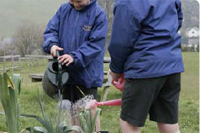
The strategic and operational demands of leading a school in a sustainable way are the subject of a particularly popular talk2learn debate. This debate is ongoing in the NCSL in Dialogue section of talk2learn and school leaders are welcome to add their views.
Key points emerging so far: what constitutes a ‘sustainable school’?; ideas for involving the whole school and community; the importance of student leadership.
Sustainability is generally understood to mean a focus on environmentally-responsible practice but it extends well beyond recycling, energy saving and ‘touching up the school site and buildings’, said Stan Terry, environment consultant for HTI, a leadership development organisation. "Sustainable schools possess a philosophy that is about involving substantive change through caring for the individual, the community and the planet and they do so through a whole school approach to sustainability. It’s a change management issue for schools and therefore needs to be addressed as a whole school issue." One way to pitch it to heads and governors is to emphasise how sustainability policies link to the Every Child Matters agenda, he added.
Jenny Wynn, head of biology at a secondary school in Lincolnshire, recommended the Eco Schools scheme as a way to encourage participation across the school. "Our Eco Schools team consists of students, teachers, support staff, governors and members of the community and the scheme has provided a framework and impetus for working towards sustainability," she said.
Sarah Clarke, a bursar in a secondary school in Surrey, had another idea for persuading sceptical leaders: "We have had the Carbon Trust in to do a free survey. I would strongly recommend this if you are having trouble convincing your management team or governors as the report is clearly set out and shows short, medium and long term changes as well as the costs involved and the savings possible."
Several contributors had examples of how sustainability had been worked into the curriculum. Gordon Dugan, a geography teacher, took his sixth form to investigate nuclear energy at the Sellafield plant in Cumbria. "A highly informed guide spends the day with you and you visit many parts of the site, including the plant where highly radioactive spent nuclear fuel cases are cut up on the floor of the radioactive waste store – something the guide described as ‘Probably the highest concentration of radioactivity anywhere in the world!’ The key point is, such tours are very informative and as long as alternative perspectives and organisations are also visited and investigated, they can be extremely helpful."
Above all, encouraging students to take the lead on sustainability was seen by many as vital to success. "The pupils here have set up an eco committee involving staff and children, and take their roles very seriously," says Michelle Hathaway, school business manager in a junior school in East Yorkshire. "They participate in lots of fundraising events and have written to local charities, the local town council, and shop proprietors, in order to fund their latest eco venture. The children have the use of the book corner to promote eco-schools and there are also noticeboards plus recycling bins for cartridges, mobile phones, shoes and clothes."