

In case you missed it… recent highlights from NCSL in Dialogue, talk2learn’s online community for national education debate:

Download a pdf version of talk2learn highlights: issue 2a (152kb, 1 page)
Download a pdf version of talk2learn highlights: issue 2b (216kb, 1 page)
Download an audio version of issue 2a (1.5Mb, 3:44 mins) and issue 2b (1.1Mb, 2:42 mins)
Subscribe to the podcast to receive future updates automatically
If you are not yet a member of talk2learn, find out more about how to join
David Bell, Permanent Secretary for the Department for Education and Skills (DfES), met with a mix of support and challenge on some of the pressing issues for school leaders emanating from the Every Child Matters agenda when he took part in a talk2learn hotseat to discuss how education policies support the drive for higher standards for every pupil.
"It is a bizarre phenomenon that what is, by common consent, the central purpose of education is so elusive and difficult to define."… a sentiment shared by many school leaders taking part in this debate, who welcomed the opportunity to think and reflect on the nature of learning: what it looks like and how they can be sure it is taking place in their own schools.
David Bell, Permanent Secretary for the DfES, met with a mix of support and challenge on some of the pressing issues for school leaders emanating from the Every Child Matters agenda when he took part in a talk2learn hotseat to discuss how education policies support the drive for higher standards for every pupil.
There was widespread support for the ECM agenda in principle, but some contributors were concerned at the realities of its implementation.
the same approach does not always work in different contexts
Challenged on the ‘babysitting’ question, which he acknowledged as a familiar issue, Bell said that extended schools’ services would meet an important need by helping working parents to support their families. "Parents, especially lone parents, have always needed good, reliable childcare and we want provision to be of good quality – the sort of care that can be provided through extended schools" he emphasised. "So I hope you’ll agree this is a business DfES should be in." Another school leader supported Bell’s response, adding that parents will be able to rely on quality care for their children and ensure that these children have a voice and are valued by other adults.
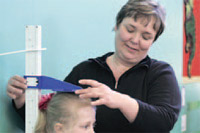
One contributor welcomed the shift to greater personalised learning as a means of supporting every child in her primary school to achieve, but had reservations about the future: "What will happen when they leave me and enter the world of pressure to perform in exams, and some teachers who feel threatened by inspection in the secondary phase?". Bell addressed this concern by saying that personalised learning should be applied throughout the school system and beyond.
He went on to state that the Qualifications and Curriculum Authority were currently looking at how to bring the KS3 curriculum up to date and drew attention to the 2020 review, which focuses on what teaching and learning should look like at the end of the next decade, including how learning can become much more personalised.
"Creating opportunities for greater involvement in the wider community and working as an extended school certainly offers challenges," reflected another school leader. Bell recognised that "the same approach does not always work in different contexts" but there were already some excellent examples of it working well.
In particular, the incorporation of education into children’s services was questioned, but Bell put up a strong defence:
Having directors of children’s services is the right way forward because we need to bring services together more effectively than we have done in the past – children’s ability to learn is inextricably linked to their whole well-being, not just their experience in school.
The position of special schools was highlighted by one school leader, who asked how the continued closures of special schools were consistent with the drive for higher standards for every pupil. "The majority of our pupils have complex, significant needs and have already tried mainstream before they come to us. We will close next July and we are truly fearful for the future of our children. Higher standards for every pupil does not mean the same provision for every pupil." Bell said that special schools would have an important and continuing role as centres of expertise, adding: "My understanding is that local authorities should set out how good quality provision will continue to be made for those children who might otherwise have attended a closing school".
www.teachernet.gov.uk/extendedschools
www.tda.gov.uk/remodelling/extendedschools.aspx
www.dfes.gov.uk/aboutus/whoswho/
"It is a bizarre phenomenon that what is, by common consent, the central purpose of education is so elusive and difficult to define."
"One of the most important lessons is surely the clear message about the joy of learning."
… a sentiment shared by many school leaders taking part in this debate, who welcomed the opportunity to think and reflect on the nature of learning: what it looks like and how they can be sure it is taking place in their own schools.
A common theme was the need for effective lesson observations, both formal and informal. There was much agreement with one head’s view that it is important to observe how well children are learning as opposed to how hard they are working: "I have had many upset teachers when I’ve told them a lesson is unsatisfactory due to a lack of learning. The usual response I get back is ‘but they were all working!’ I have introduced staff meetings looking at learning. We are looking at what kinaesthetic learners, auditory learners and visual learners are and have discussed strategies to aid these learners. I find the whole debate very interesting and key to my children’s success."
A head of a fresh start school described how they handles the issue:
"Every lesson has clear learning objectives which are shared verbally and written down for children… the success criteria are also shared and displayed so they know what is expected of them."
I love it when there is spontaneity in the classroom.
Whilst there was some support for this approach, other school leaders did not agree. "Sometimes we need to let them lead us to where they want to go", one commented. "I love it when there is spontaneity in the classroom; when excitement takes over and teaching and learning goes in a different direction… children learn a great deal in these situations and one of the most important lessons is surely the clear message about the joy of learning."
Sue Attard, Head of Lark Rise Lower School in Bedfordshire said: "All we need to do is to offer young people the vocabulary to talk about their learning and they will help us to unlock the issues for them. Sounds simple but it can be very difficult when pressures from a top-down system insist on us tweaking percentages rather than working with individual human beings." Another head described his approach to empowering pupils: "I have introduced a Learning to Learn policy and spend time showing pupils how their brain works and how they can help to make it work better".
What is learning?  (28kb, 4 pages)
Leading Learning: Instructional leadership in infant schools
Leading Learning and Teaching Primary Schools
Leading Personalised Learning in Schools: Helping individuals grow